

Understanding Football Predictions for Nigerian Fans
⚽ Get today’s football predictions tailored for Nigerian fans. Learn how experts analyse matches, use stats, avoid scams, and find trustworthy forecasts all in one place.
Edited By
Ikechukwu Nwosu
The Nigeria national football team, often called the Super Eagles, stands as one of Africa's most celebrated football squads. Founded in the 1940s, the team has grown in stature, representing Nigeria in global tournaments and regional championships with distinct flair and resilience.
Known for their speed, skill, and tactical intelligence, the Super Eagles have claimed several key titles, including three Africa Cup of Nations (AFCON) championships in 1980, 1994, and 2013. They also made notable appearances in the FIFA World Cup, reaching the Round of 16 multiple times, a record that signals Nigeria's rising football prominence on the international stage.
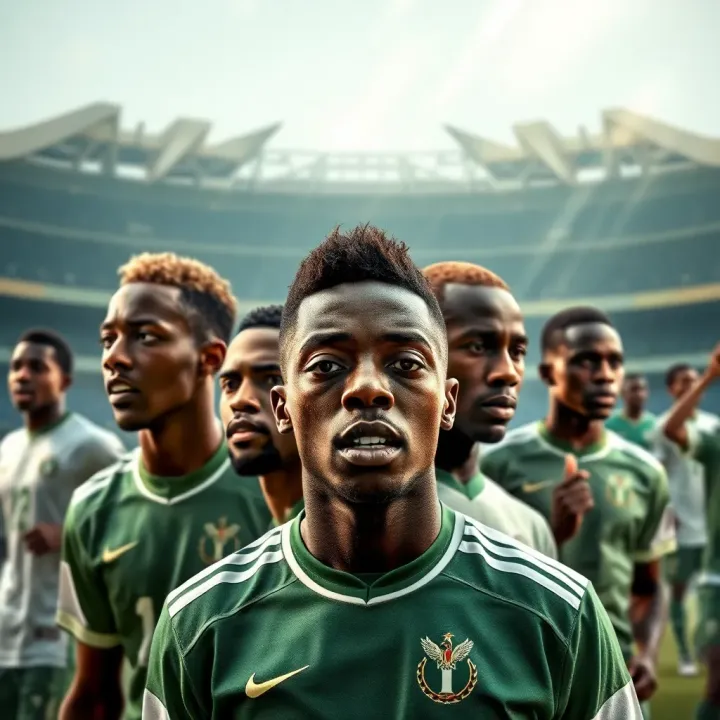
The team's success extends beyond trophies; it has been a breeding ground for talent that shines both locally and abroad. Players like Rashidi Yekini, Jay-Jay Okocha, and more recently, Victor Osimhen, have made their mark in top European leagues, raising Nigeria's football profile worldwide.
Nigeria’s football administration is primarily handled by the Nigeria Football Federation (NFF), which is responsible for team management, development programmes, and coordination of fixtures. Despite organisational challenges and occasional funding issues, the federation continues investing in youth development projects and domestic leagues to nurture homegrown talents.
The Super Eagles are more than just a team; they are a symbol of national pride and unity, sparking passion amongst millions of Nigerians both at home and in the diaspora.
Historical legacy: Established over 70 years ago with growing international reputation.
Major achievements: Three AFCON titles, consistent World Cup qualifications, Olympic gold in 1996.
Player development: Continuous export of talent to European clubs bolstering Nigeria's footballing status.
Management: Governed by NFF, navigating complex financial and logistical hurdles.
Fan base: Broad and passionate, spanning all Nigerian states and global Nigerian communities.
Understanding the Super Eagles requires appreciation of their cultural impact, on-field exploits, and off-field dynamics. This overview sets the stage for deeper exploration of their journey, hurdles, and future prospects in Nigerian and world football.
Understanding the history and formation of the Nigeria national football team is key to grasping how the team grew into one of Africa’s top football powers. Its origins reveal the intersection of colonial influence and local passion for the game, setting the stage for Nigeria’s rise on the international scene. An informed look at this journey helps highlight current strengths and challenges.
The Nigeria national team, known today as the Super Eagles, was formally established in the 1940s during British colonial rule. Early matches were against regional clubs and neighbouring countries like Ghana and Sierra Leone, reflecting football’s growing popularity across West Africa. Nigeria’s first international match was against the Gold Coast (now Ghana) in 1949, which ended in a narrow loss but marked a milestone. This period was a testing ground for building local football structures, despite limited funding and poor facilities.
Football during these early years was organised informally, with players often drawn from regional teams and colonial government departments. Still, these matches boosted national pride and helped lay a foundation for future professionalism. The involvement of schools and community clubs also played a role in nurturing young talent, with football becoming a unifying pastime even before Nigeria’s independence in 1960.
From the 1960s onwards, the Nigeria national team began moving beyond regional friendlies to compete in continental tournaments like the Africa Cup of Nations (AFCON). The 1970s and 1980s saw the team solidify its reputation by winning the AFCON in 1980 and making its first World Cup appearance in 1994. This era also introduced more organised development of youth academies and greater investment from the Nigeria Football Federation (NFF).
Throughout the decades, changes in coaching, administration, and international exposure shaped the team’s evolution. Nigerian players like Rashidi Yekini and Nwankwo Kanu became household names, symbolising the country’s footballing talent. However, challenges such as inconsistent funding, governance issues, and infrastructural gaps continued to hamper progress.
The team’s history offers valuable lessons about resilience and adaptability that still influence the Super Eagles’ approach today.
Understanding these phases lets readers appreciate how Nigeria’s football culture grew from grassroots beginnings to a competitive force capable of competing on the world stage. It also contextualises recent developments in player development and management.
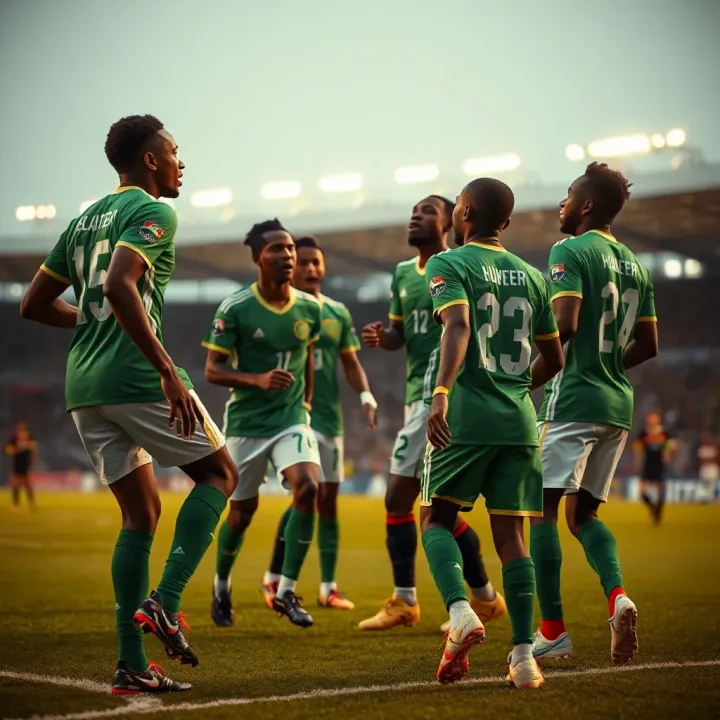
Nigeria's national football team, popularly known as the Super Eagles, holds a significant place in African and global football due to its impressive achievements and consistent participation in major competitions. These accomplishments not only boost national pride but also attract sponsorships, improve player market values, and enhance the team's global reputation. Understanding the Super Eagles' wins and tournament performances gives insight into Nigeria's football evolution and its impact on the sports economy.
The Africa Cup of Nations (AFCON) stands as the biggest stage for African national teams, and Nigeria has enjoyed considerable success here. The Super Eagles have won the tournament three times: in 1980, 1994, and 2013. Their 1994 AFCON victory, held in Tunisia, was particularly memorable as it coincided with Nigeria's first-ever World Cup qualification, marking a golden era in Nigerian football. During that tournament, Nigeria showcased a robust defence and a clinical attack spearheaded by players like Rashidi Yekini, whose performances remain legendary. These triumphs have cemented Nigeria as one of Africa’s football powerhouses and have helped attract young talents to the sport nationwide.
Nigeria has qualified for the FIFA World Cup on six occasions since its debut in 1994, making it one of Africa’s most frequent participants. Their debut saw Nigeria reach the Round of 16, a feat they matched in 1998 and again in 2014. The 1994 World Cup in the United States especially raised Nigeria's profile, thanks to a rich squad blending experience and youthful energy, including stars such as Jay-Jay Okocha and Daniel Amokachi. These performances have encouraged Nigerian players to seek opportunities abroad, boosting the country’s football reputation and proving the quality of Nigerian talent on the world stage.
Apart from AFCON and the World Cup, Nigeria has also made its mark in other tournaments such as the Olympic Games and the FIFA Confederations Cup. Notably, the Super Eagles captured the Olympic football gold medal at the 1996 Atlanta Games, a first for an African team, showcasing Nigeria’s youth development success. Also, Nigeria has participated in the FIFA Confederations Cup and the African Nations Championship (CHAN), which features home-based players. These tournaments provide further competitive experience, enhancing the squad's depth and resilience.
Nigeria’s consistent presence and achievements in international competitions reflect its commitment to football excellence and contribute significantly to the country’s sports culture and economy.
In summary, the Super Eagles’ achievements in AFCON, World Cup, and other tournaments have not only shaped the team’s legacy but also inspired millions across Nigeria. Their performances are critical benchmarks for measuring progress and planning future growth strategies.
Player development remains one of the most vital pillars supporting the Nigeria national football team's sustained success. The Super Eagles’ ability to compete internationally depends heavily on nurturing young talent through solid youth programmes and football academies. These institutions not only sharpen the skills of future stars but also help create a steady pipeline of players capable of representing Nigeria on the global stage.
Nigeria has several youth programmes and football academies committed to developing young talents. Institutions like the Pepsi Football Academy have produced players who later shone both locally and abroad. These academies provide structured training environments where players learn technical skills, tactical awareness, and physical conditioning from an early age. The Nigeria Football Federation (NFF) also supports grassroots initiatives aimed at scouting and educating kids across the country, including less urban areas where hidden gems often emerge.
Besides formal academies, football-loving communities and clubs invest in informal youth setups that serve as breeding grounds for the next generation. Challenges such as inconsistent funding, inadequate infrastructure, and limited access to quality coaching persist, yet dedicated academies have still managed to discover talents like Kelechi Iheanacho and Samuel Chukwueze, who now represent Nigeria on the international stage.
Several players have made remarkable impacts on both the national team and Nigerian football’s global profile. Jay-Jay Okocha, known for his flair and creativity, captivated fans throughout the 1990s and early 2000s, inspiring countless young Nigerians to pursue football seriously. More recently, players like Victor Moses and Ahmed Musa combined skill and experience to deliver crucial performances at FIFA World Cups and Africa Cup of Nations tournaments.
The emergence of young talents such as Wilfred Ndidi and Joe Aribo signals promising continuity for the Super Eagles. These players have transferred their youth academy groundwork into professional success, both within Nigeria’s local leagues and overseas clubs in Europe. Their technical sharpness and tactical versatility strengthen the team’s midfield and attack, essential for facing tough opponents.
Player development through quality youth programmes and outstanding individual contributions drives the Nigeria national football team's competitiveness and ensures the nation's football culture thrives internationally.
In summary, investing in youth programmes and recognising emerging talents remain critical for maintaining Nigeria’s football prestige. Dedicated academies, combined with committed players, have repeatedly proven the formula that sustains the Super Eagles’ presence among Africa’s best and their growing influence on the global stage.
A solid management and coaching setup, backed by an efficient organisational structure, is key to the Nigeria national football team's success. Without cohesive leadership and clear roles, even the most talented players can struggle to perform well on the international stage. The way the Nigeria Football Federation (NFF) oversees operations and the calibre of coaches appointed directly affect the team’s performance, development, and consistency.
The Nigeria Football Federation is the central body responsible for the administration, regulation, and advancement of football in the country. It organises fixtures, manages national team affairs, negotiates sponsorship deals, and liaises with global bodies like FIFA and CAF. Notably, the NFF plays a critical role in funding and resource allocation—often a challenge in Nigerian football given limited infrastructure and economic pressures. For example, securing sponsorship from companies like Globacom or access to decent training facilities can have a direct impact on how competitive the Super Eagles become.
Besides administrative duties, the NFF is also in charge of appointing coaches, medical staff, and technical directors. These decisions shape team tactics, player development, and overall professionalism. Governance challenges at the NFF have occasionally disrupted the team’s momentum, but recent efforts to improve transparency and planning have shown promise.
Nigeria’s coaching history offers a mixed bag of local and foreign influences, reflecting different tactical eras and philosophies. Legendary coaches like Clemens Westerhof, who led Nigeria to the 1994 Africa Cup of Nations title and the World Cup, introduced discipline and tactical organisation that significantly raised the team’s profile. Similarly, foreign coaches like Stephen Keshi added value by blending European tactics with Nigerian flair and spirit.
On the local coaching front, figures such as Shuaibu Amodu contributed severally to the team’s development, showing how homegrown talent can master the complexities of international football. Current coaches are often under pressure to balance attacking football, which Nigerian fans adore, with defensive solidity to improve outcomes in tournaments.
Efficient management and coaching must go hand in hand, supported by an organisational structure that promotes accountability and long-term planning.
In summary, the marriage between the NFF’s administrative framework and the technical direction set by coaches defines the Nigeria national team’s trajectory. While financial struggles and inconsistent management have sometimes hindered progress, a more strategic approach holds the key to building a team that can regularly compete with the best globally and deliver on the nation’s high expectations.
Understanding the challenges facing the Nigeria national football team is crucial for anyone tracking its progress and potential. These hurdles directly influence performance, fan engagement, and the team’s ability to compete globally. At the same time, recognising prospects highlights areas where growth and improvement can secure a stronger future. This section breaks down the main obstacles and opportunities related to funding, infrastructure, player welfare, fan support, media influence, and strategic growth plans.
One of the biggest challenges Nigerian football faces is inconsistent funding and inadequate infrastructure. While the Nigeria Football Federation (NFF) receives government and sponsor funds, there are often delays and shortfalls that affect preparations and facilities. For example, training grounds in some states still lack modern turf and essential equipment, which puts players at a disadvantage compared to their counterparts in Europe or South America.
Player welfare remains another concern. Instances of unpaid allowances and poor medical support have surfaced severally, dampening morale. Take the case of some home-based players who often bear personal costs during training camps. Without timely insurance, health care, and decent accommodation, attracting and retaining top talents becomes harder. Better funding and investment in infrastructure are essential to guarantee the Super Eagles operate on the same level as other top African teams.
Fan support continues to be a double-edged sword for the Super Eagles. Nigerian fans are some of the most passionate worldwide, filling stadiums and lighting up social media during major tournaments. Their presence often inspires players on the pitch. However, there are times when unrealistic expectations lead to intense criticism, which can affect player confidence.
The media plays a significant role here. Positive coverage helps build national pride, while sensationalist reporting sometimes stokes unnecessary pressure. For example, during the 2018 World Cup, media focus on team controversies overshadowed on-field achievements. Balancing honest analysis with encouragement can help sustain healthy public interest and motivate better performances.
Looking ahead, the NFF has outlined plans focusing on grassroots development and strengthening football academies across the country. These strategies target unearthing talents from diverse regions, including rural areas that often get overlooked. There are also talks about enhancing partnerships with international clubs for knowledge exchange and improved scouting.
Additionally, improving the scouting and welfare system for home-based players aims to create a more stable team environment. The Super Eagles’ future success depends not only on star players abroad but also on building a strong, well-supported local base.
Solid funding and infrastructure development, combined with realistic fan expectations and strategic youth investment, will shape the Super Eagles’ trajectory for the next decade.
In summary, tackling existing challenges head-on while pursuing structured growth plans creates a positive pathway for Nigeria’s national team. For bettors, analysts, and football enthusiasts, understanding these dynamics provides better insight into the team's potential performances on the international stage.
⚽ Get today’s football predictions tailored for Nigerian fans. Learn how experts analyse matches, use stats, avoid scams, and find trustworthy forecasts all in one place.

⚽ Discover how Football Msport Live lets Nigerian fans catch live matches, follow updates, and enjoy football action with secure, easy streaming across Nigeria’s digital space.
⚽ Enjoy MSport live football streaming in Nigeria with easy access to local and international matches on mobile and web. Discover features, tips, and challenges here!

⚽MSport live stream gives Nigerian fans easy access to football matches online. Discover tips, features & how it stands out among other streaming services in Nigeria.
Based on 12 reviews