
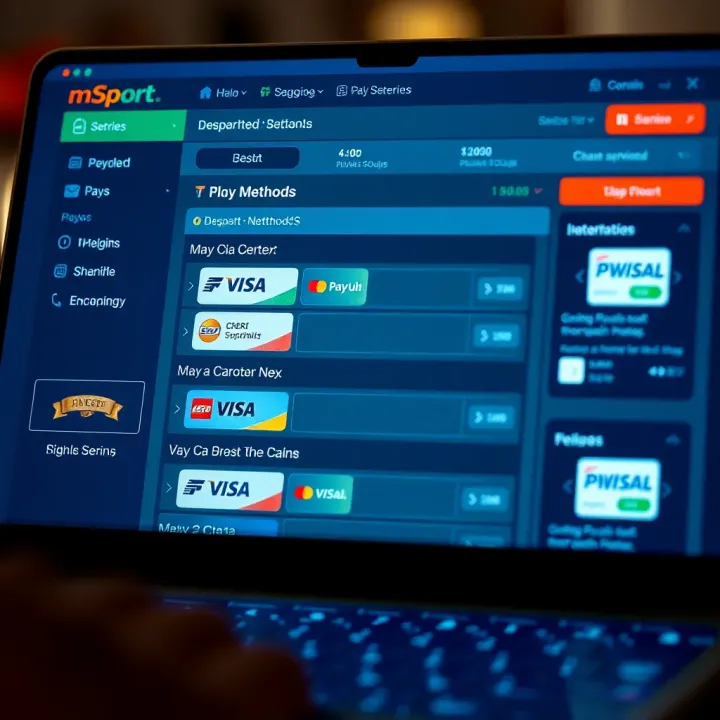
How to Deposit on mSport: Simple Steps for Nigerian Users
Learn how to deposit on mSport quickly and safely in Nigeria 💰. Get step-by-step tips, payment options, and how to avoid common issues for hassle-free betting!
Edited By
Ikechukwu Nwosu
The MSport Rocketman strategy is an approach designed to help businesses and sports professionals in Nigeria gain an edge in competitive fields. Originating from a blend of performance analytics and tactical execution, this method focuses on fast, efficient decision-making and seizing opportune moments for growth or victory.
In Nigeria's vibrant business scene and dynamic sports industry, applying a clear-cut framework like MSport Rocketman can make a significant difference. For example, a startup company navigating Lagos’ busy market might use elements of this strategy to pivot quickly when consumer demand shifts. Similarly, a football team could adjust its formations mid-game based on MSport insights to outperform opponents.
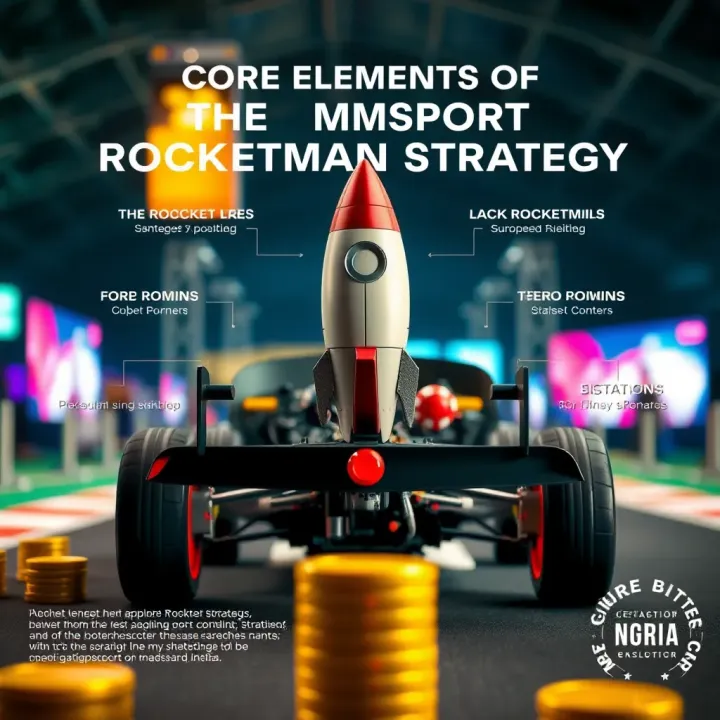
At its core, the MSport Rocketman strategy involves:
Data-driven decision-making: Using relevant metrics from real-time data to guide actions.
Agility: Rapid adaptation in response to changing environments.
Focused execution: Prioritising key areas that promise the highest returns or impact.
Employing this strategy requires an understanding not just of the theory but of practical circumstances. Nigerian sports managers and entrepreneurs alike benefit by tailoring these principles to local conditions, such as infrastructure challenges or consumer behaviour.
By breaking the strategy into these manageable parts, you can evaluate where to inject resources or adjust tactics, whether handling naira fluctuations or reactng to a sudden player injury. This makes the MSport Rocketman approach highly practical in environments that demand flexibility and precision.
Overall, this guide aims to demystify the MSport Rocketman strategy, providing actionable insights for Nigerian businesspeople, sports managers, analysts, and students looking to enhance their competitive advantage effectively. You'll find helpful examples that align with Nigerian contexts to ensure you grasp both the theory and practice behind this strategy.
Understanding the MSport Rocketman Strategy is essential for anyone looking to improve performance in both sports and business within Nigeria’s dynamic environments. This strategy centres on maximising speed, energy, and momentum to outpace competitors and capitalise on opportunities effectively. By breaking down this approach, the article aims to provide readers with practical insights to apply immediately in their contexts.
The strategy's relevance is clear in sectors where quick decision-making and sustained energy determine success. For example, football clubs in the Nigerian Professional Football League (NPFL) have employed aspects of the Rocketman Strategy to enhance training regimes, focusing on burst energy sequences followed by strategic rest periods. Similarly, businesses in Lagos’ bustling markets leverage momentum by launching aggressive marketing campaigns during peak sales periods, riding the wave of consumer interest.
At its core, the MSport Rocketman Strategy is about creating and maintaining high levels of momentum much like a rocket's acceleration. It combines rapid bursts of energy with strategic pauses that prevent burnout, allowing consistent forward progress without collapse. Practically, this means balancing intense effort phases with recovery, enabling teams and businesses to sustain performance over time.
For instance, a basketball team might use the strategy by timing high-intensity plays during crucial match moments while conserving energy during low-pressure phases. In business, a firm could launch marketing drives around Sallah sales periods, scaling back immediately after to prepare for the next surge. The tactical use of energy helps achieve peak performance during critical intervals.
The MSport Rocketman Strategy emerged from studies of athletic training and sports science combined with business agility models. It was developed after observing how athletes recover and maintain peak performance over tournaments, transferring those lessons to competitive business landscapes.
The strategy’s name reflects the blending of sport ('MSport') with the concept of a rocket's momentum, symbolising speed, power, and a focused trajectory. It gained traction first with Nigerian sports professionals who sought to go beyond traditional endurance training by emphasising calculated energy bursts.
Later, business leaders adopted the framework to navigate Nigeria’s often volatile markets, where timing and energy allocation can make or break success. For example, fintech companies like Paystack and Flutterwave often launch product updates timed with market readiness, maintaining customer engagement without exhausting resources.
Applying the MSport Rocketman Strategy requires understanding both your capacity and the environment, ensuring you strike a balance between speed and control.
This section sets the stage for a deeper look at how the strategy works and how you can use it within your own context to sharpen results, avoid burnout, and keep ahead of competition.
Understanding the core components of the MSport Rocketman strategy is vital for anyone wanting to apply it successfully in Nigerian sports or business contexts. This strategy is built on principles that channel energy and momentum purposefully, producing tangible results without unnecessary strain or burnout.

At its heart, the Rocketman strategy emphasises agility, focus, and adaptability. It encourages constant evaluation of the environment and rapid adjustment to shifting conditions. For instance, a football team adopting this strategy would prioritise quick decision-making on the field rather than rigid tactical play. This dynamic approach means rather than overcommitting resources in one area, the team stays flexible, exploiting opportunities as soon as they appear.
The principle of incremental progress is also key. Instead of aiming for large and risky leaps, the strategy values smaller, consistent gains that accumulate over time. For a Nigerian fintech startup, this could mean launching new app features in a phased manner, learning customer feedback before full-scale rollout. This reduces risks associated with rapid expansion and aligns closely with the often unpredictable nature of Nigeria’s market.
The Rocketman strategy relies heavily on efficient use of energy. Much like a sprinter who sprints in bursts rather than running at full speed throughout, organisations and teams under this system channel their efforts where they matter most. For example, Nigerian athletes preparing for competitions like the National Sports Festival might focus their energy around peak performance periods, avoiding exhaustion from long, unstructured training cycles.
Momentum, on the other hand, is about sustaining and building upon early successes. Once initial progress is made, maintaining that forward motion becomes crucial. In a business sense, a trading company in Lagos might ride the momentum of a successful product launch by quickly expanding its distribution network while brand awareness remains high. Losing momentum usually results in wasted effort and lost advantages.
The careful balance of conserving energy and maintaining momentum is what sets the Rocketman strategy apart from more traditional, rigid approaches.
Applying the Rocketman strategy thus demands attention to timing and precision. Knowing when to push hard and when to conserve resources can save a business or team from costly missteps. It’s this disciplined yet flexible approach that makes the Rocketman strategy practical and well-suited for Nigeria’s fast-moving and sometimes unpredictable environments.
In essence, mastering the core components unlocks a blueprint for navigating complexity with focus and resilience—qualities every bettor, analyst, journalist, or student would do well to understand in the evolving Nigerian sporting and business arenas.
The MSport Rocketman Strategy finds strong relevance in Nigeria’s competitive arenas, especially in sports and business sectors where both energy and adaptability matter. Applying this strategy helps individuals and teams synchronise momentum with operational efficiency, an approach that often leads to better performance and results. This section explores how Nigerian sports teams and businesses can benefit from tailoring the Rocketman framework to their unique environment.
Nigerian sports, particularly football, have seen moments where the Rocketman Strategy’s principles seem to play out naturally. Take the Super Eagles during the AFCON tournaments; their ability to surge forward aggressively in the second half often results from leveraging momentum carefully cultivated in the first half. On a grassroots level, local football academies now integrate stamina building with strategic rest, mirroring the Rocketman principle of managing energy bursts for critical moments.
In athletics, athletes like Tobi Amusan exhibit traits aligned with the strategy—explosive starts, followed by sustained speed that conserves energy for crucial laps. Coaches in Nigeria increasingly focus on pacing strategies that balance intensity and recovery to emulate this, helping athletes compete better on both regional and global stages.
Moreover, events like the Lagos Marathon incorporate pacing zones where runners are encouraged to manage their energy output strategically instead of sprinting from the outset, showing awareness of momentum and endurance concepts.
In the business world, Nigerian companies face fluctuating market conditions caused by naira volatility, power challenges, and regulatory changes. The Rocketman Strategy’s focus on balancing assertiveness with endurance can guide business leaders to adapt their operations dynamically.
For instance, a fintech company like Paystack could apply this by launching aggressive marketing campaigns (energy bursts) followed by periods focused on customer support and service refinement (momentum maintenance). This helps avoid burnout and market oversaturation while reinforcing brand presence steadily.
Retail businesses, especially during ember months when spending surges, use a similar approach by scaling up stock and promotions ahead of time, then maintaining consistent customer engagement afterwards to maximise returns. This on-and-off rhythm reflects Rocketman’s balance between pushing hard and regulating pace.
Applying MSport Rocketman in Nigeria is about understanding when to surge aggressively and when to maintain steady progress, essential lessons both on the football pitch and in boardrooms.
To implement the strategy effectively, businesses and sporting teams must customise it to local realities like infrastructural challenges and consumer behaviours. Embracing flexibility, monitoring performance metrics, and adjusting energy deployment can transform how Nigerians compete — not just to survive, but to excel.
The MSport Rocketman strategy offers a unique mix of advantages and challenges that are essential to weigh for anyone aiming to adopt it, be it in sports or business settings. Understanding these benefits and drawbacks helps professionals prepare better, optimise outcomes, and avoid common pitfalls. For Nigerian readers — from bettors to analysts — recognising the practical implications reveals how the strategy fits into local dynamics.
One major benefit of the Rocketman approach lies in its focus on momentum and energy cycles. It encourages consistent effort at key times, which can lead to improved performance in tightly contested sports matches or during competitive business periods like ember months. For example, a football team applying this strategy might time its peak training and performance around crucial league fixtures, increasing the chance of wins as opposed to spreading effort thinly across the season.
Another advantage is its adaptability across sectors. Nigerian businesses, especially in fintech or retail, can use Rocketman principles to launch targeted campaigns that exploit bursts of market interest. Think of a startup like OPay or Jumia Nigeria ramping up customer acquisition around Sallah or Christmas, when spending spikes. This tactical timing can multiply return on investment compared to steady but unguided promotion.
The strategy’s emphasis on planning and monitoring also builds discipline within teams or organisations. It forces objective reassessment of performance metrics regularly, helping identify when to accelerate efforts or scale back, which is a big plus in volatile environments like Lagos traffic-aired logistics or fluctuating naira exchange rates.
However, the Rocketman strategy is not without issues. One challenge is the risk of burnout. The sharp bursts of high energy demand can exhaust players or employees if rest and recovery are neglected. This is common in Nigerian football clubs or businesses that push too hard during ember months without adequate support systems.
Another problem is the difficulty in precise timing. The strategy relies heavily on correctly forecasting when to invest energy and resources. Nigerian markets are, however, often unpredictable due to factors such as sudden policy changes by the Central Bank of Nigeria or disruptions from security challenges, which can throw momentum plans off course.
Additionally, Rocketman’s reliance on momentum means long-term consistency might suffer. Sporadic surges of effort can overlook steady progress, which in some sectors like agriculture or manufacturing is crucial. For instance, a farm using the Rocketman strategy may miss out on benefits of regular maintenance cycles.
Weighing these pros and cons carefully will ensure you use the Rocketman approach in a way that maximises its benefits and minimises risks. Knowing when and how to act matters more than simply following the model blindly.
Ultimately, the Rocketman strategy offers a practical, focused method to surge ahead in competitive Nigerian environments, but it demands discipline, situational awareness, and balance to succeed sustainably.
Implementing the MSport Rocketman Strategy requires a hands-on approach that emphasises preparation, consistency, and ongoing assessment. This section focuses on practical steps that Nigerian sports teams and businesses can take to embed the strategy effectively. The gains from applying these steps include sharper competitive edges, improved team cohesion, and measurable progress in performance.
Effective rollout of the Rocketman Strategy starts with detailed preparation and planning. Organisations need to clearly define their objectives, resources, and timelines before taking any action. For instance, a Nigerian football club aiming to harness this strategy would first assess its player strengths, available coaching staff, and fixture schedule to craft a workable plan. Equally, businesses in Lagos or Abuja should evaluate their market position, workforce capabilities, and logistical constraints upfront.
Key elements during preparation include:
Setting specific targets that align with overall goals.
Identifying critical resources, such as funding, personnel, or technology platforms like Paystack for payments.
Creating a timeline with milestones to guide implementation phases.
Engaging stakeholders early—players, staff, investors, or suppliers—to secure buy-in and support.
Without this solid groundwork, attempts at applying the Rocketman Strategy can falter due to unclear direction or inadequate resources.
Consistency is the engine that drives long-term success when using the Rocketman Strategy. Teams and businesses must keep their efforts steady, adjusting only when backed by data or clear feedback. For example, a sports team might track player stamina and match outcomes regularly, using this information to tweak training without losing strategic momentum.
Practical ways to maintain consistency include:
Developing routine practices that reinforce core principles of the strategy.
Using performance tracking tools, such as digital dashboards or simple spreadsheets, to monitor key indicators.
Holding regular review meetings to discuss progress, challenges, and necessary course corrections.
Encouraging open communication within teams to resolve problems quickly and share insights.
Regular monitoring not only identifies areas needing improvement but also sustains motivation by showing tangible results.
In Nigeria’s dynamic sporting and business environments, staying disciplined and responsive through these methods ensures that the Rocketman Strategy delivers practical and sustainable benefits.
By focusing on thorough preparation and consistent follow-up, organisations avoid drifting off course and instead build a clear path to achieving their competitive ambitions.
Learn how to deposit on mSport quickly and safely in Nigeria 💰. Get step-by-step tips, payment options, and how to avoid common issues for hassle-free betting!
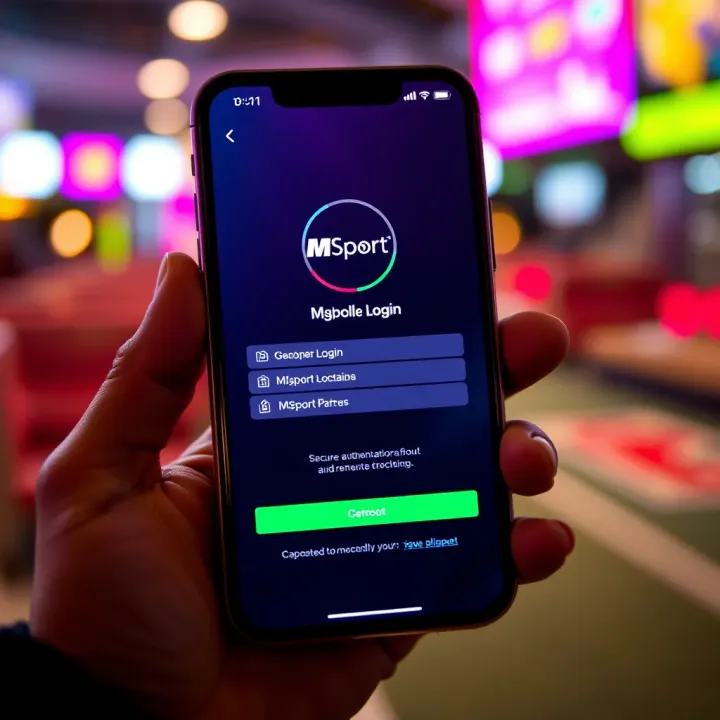
📱 Explore the new MSport mobile login! Step-by-step guide, top security tips, plus quick fixes for common glitches to access your service easily and safely.

Discover how to log into Msport in Cameroon with ease 🎮, explore key features, stay safe online 🔒, and troubleshoot like a pro for smooth experience every time.
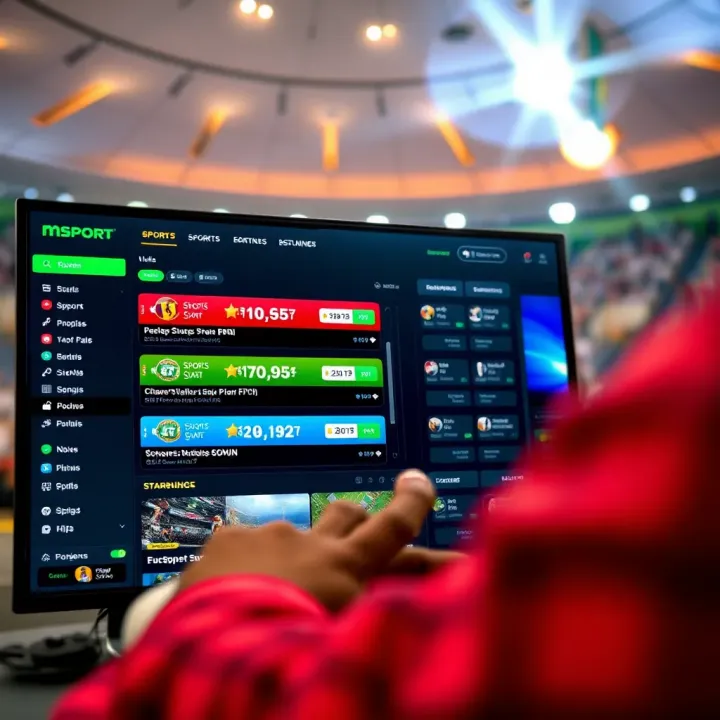
🎯 Master betting with Msport in Nigeria. Learn how to set up accounts, place bets, explore payment options, beat common challenges, and stay within legal limits for a safe play experience! ₦
Based on 5 reviews