

Understanding Multiple Bets on Msport in Nigeria
Discover how to boost your winnings on Msport with multiple bets strategies 🏆. Learn types, risks, and smart bankroll tips tailored for Nigerian bettors 🇳🇬💰.
Edited By
Ifeyinwa Nnamani
Msport's Plinko game has become popular across Nigerian gaming platforms for its simple yet exciting design. At the heart of this game lies the Plinko algorithm — a mathematical engine that generates results based on chance and probability. Understanding this algorithm is key for bettors and analysts who want to grasp how fairness is maintained and how outcomes are produced.
The Plinko algorithm operates by simulating the ball's fall through a triangular grid of pegs, where it can randomly tumble left or right until it lands in one of several slots with differing payouts. Behind the scenes, this randomness is dictated by a pseudorandom number generator (PRNG), which ensures every play is independent and unpredictable within regulated bounds.

The algorithm's unpredictability prevents manipulation while providing transparency about game mechanics — a crucial factor for regulatory compliance and building player trust.
Mathematically, the algorithm relies on probability distributions similar to binomial or normal distributions to model the likelihood of the ball landing in various slots. For example, central slots often have higher chances but lower payouts, while edge slots are rarer but reward bigger wins. This balance reflects well-known statistical principles, helping keep the game fair and engaging.
From a regulatory perspective, the algorithm must pass rigorous audits from gaming authorities to certify it meets fairness standards. This includes checks for randomness quality, return-to-player rates, and adherence to local gaming laws. Since Msport operates within Nigeria's evolving digital gaming space, compliance safeguards both players and the platform.
For players, recognising the role of the Plinko algorithm is not about predicting exact outcomes but understanding the odds and potential returns. It encourages responsible gaming by dispelling myths around "pattern hunting" or fixed results. Practical tips include setting limits, spreading bets, and avoiding chasing losses, all rooted in awareness of the underlying algorithmic fairness.
In the following sections, this article will unpack the detailed workings of the Msport Plinko algorithm, its impact on gaming fairness, mathematical foundations, and guidelines for responsible play, providing you with a solid grasp of what drives Plinko outcomes on Msport platforms.
Understanding how the Msport Plinko algorithm works is key to grasping why players see the results they do on the platform. This section unpacks the mechanics behind the game and explains how the algorithm influences outcomes, shedding light on the transparency and fairness players expect. Grasping these details helps bettors, analysts, and gamers manage expectations and engage responsibly.
Plinko is straightforward yet entertaining. Players drop a virtual ball from the top of a pegged board where it bounces randomly through obstacles before landing in one of several slots at the bottom. Each slot corresponds to a specific prize or payout. Think of it like dropping a small okada rider into a busy Lagos traffic junction and watching which route the rider takes. The excitement is in the unpredictability of the ball’s path.
On Msport, the Plinko game mimics this setup digitally, with the algorithm regulating the ball's movement to ensure the gameplay appears natural and engaging while determining the final landing slot. This system keeps the game lively and fair, avoiding repetitive or predictable outcomes that would turn players off.
The algorithm at Msport doesn’t just create random results; it manages the entire gameplay process. It computes where the ball can logically fall based on simulated physics and programmed probabilities, all while maintaining fairness standards regulated by Nigerian gaming authorities.
For example, when a player drops the ball, the algorithm rapidly calculates numerous potential paths the ball might take. The final outcome is influenced by these calculations combined with chance, much like casting dice multiple times before settling on one number. This makes every game round unique and fair.
The backbone of the Msport Plinko results is a carefully designed Random Number Generator (RNG). The RNG produces numbers that guide how the ball moves through the Plinko board, making each drop unpredictable. This unpredictability is important because it prevents manipulation and maintains player trust.
Without RNG, outcomes could be predictable or rigged, eroding confidence among players. To keep the game authentic, Msport regularly tests and updates its RNG system to meet industry standards, ensuring each play is independent and unpredictable.
Maintaining unpredictability means the game doesn’t fall into patterns that savvy gamblers could exploit. The RNG integrates complex mathematical formulas and seeds based on time and other variables, much like a mama put who spices her food differently every day to keep customers intrigued.
This level of randomness is continuously monitored through software audits and external testing to confirm no biases or predictable trends creep in. Players can therefore be confident that each Plinko game on Msport offers a fair chance without pre-set results.
The Msport Plinko algorithm balances simulated physics, random number generation, and regulatory compliance to deliver an honest gaming experience where every drop counts equally.
By understanding these inner workings, gamers and analysts alike can better appreciate the skill and chance balance, setting realistic expectations before betting on Msport’s Plinko game.
Understanding the mathematics behind the Msport Plinko algorithm is key to grasping how the game produces fair and unpredictable outcomes. The algorithm leverages probability and models of randomness to simulate the ball’s movement and determine the prize positions. These mathematical elements guarantee that no two game plays are exactly the same, even while maintaining a balanced distribution of prizes over time.
The Plinko game simulates balls dropping through a series of pegs arranged in a triangular pattern, much like the real Plinko board seen on TV shows. At each peg, the ball has a certain chance to fall either left or right, which serves as a binary event model. These small, successive left-right decisions compose a probability distribution that guides the ball’s final landing slot.
In practice, the likelihood of landing in a particular slot follows a bell-shaped probability curve, with slots near the centre being the most probable outcomes and slots at the edges less so. This setup ensures the game doesn’t favour extreme wins or losses at the frequency extremes, thus creating better risk management for the operator and a more engaging experience for the player.
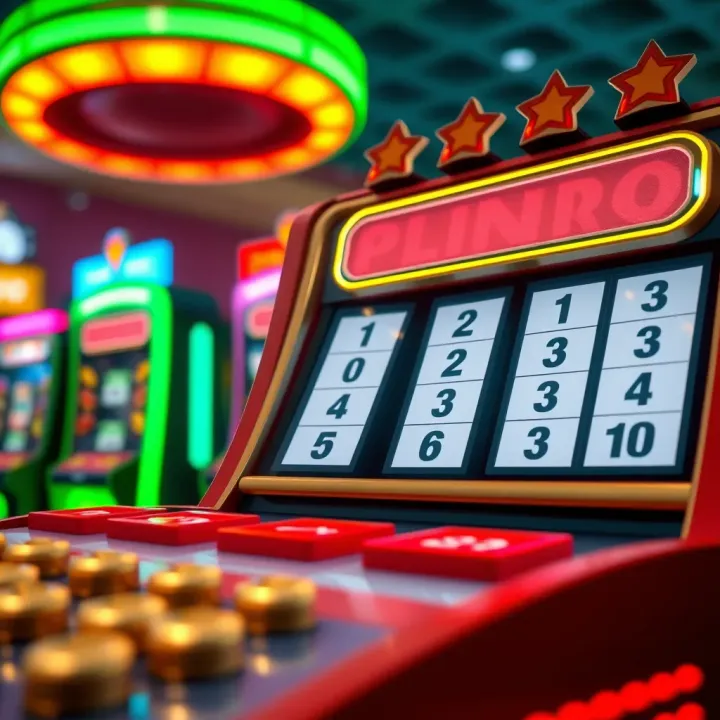
Each slot at the bottom corresponds to a payout value, and the probability of hitting these prizes depends on the ball’s path through the pegs. Central slots offering moderate rewards tend to occur more frequently, while high-value or jackpot slots positioned at the edges register far fewer hits. This balance reflects the algorithm’s design to maintain a consistent return-to-player ratio while preserving excitement.
For instance, if a game has 9 slots, the middle 3 slots might be assigned medium prizes with 50-60% combined probability, whereas the outer slots might give larger prizes but with under 10% likelihood to appear. Players looking out for high payouts should recognise these odds to set realistic expectations.
The algorithm models each ball drop as a series of random binary decisions at every peg point, effectively mimicking physical ball bounces without mechanical equipment. It uses a random number generator (RNG) to decide each move, creating many possible trajectories. This simulation helps ensure that each game round is unique and free from predictable patterns.
Such modelling also allows Msport to stress-test the algorithm under various conditions, verifying that it behaves statistically as expected over thousands of plays. This strengthens confidence that gameplay remains fair and that no sequence can be exploited.
After simulating the ball’s path through the pegs, the algorithm maps the endpoint to a specific prize slot. Because the prize layout is fixed, each endpoint corresponds directly to a reward amount. The positions of high-value prizes are typically placed at lower probability slots to preserve balance.
Additionally, the algorithm can tweak prize distributions if needed to better fit regulatory requirements or business goals while maintaining transparency. For example, during ember months when player engagement peaks, slight adjustments may optimise returns and keep the game attractive without compromising fairness.
The careful combination of probability theory and algorithmic design ensures that Msport’s Plinko game remains both exciting for players and compliant with gaming standards in Nigeria.
Fairness and transparency are the backbone of trust in Msport games, especially for players invested in platforms offering Plinko and similar betting options. They guarantee that outcomes are not rigged or manipulated, which is essential in building long-term confidence in online gaming. Without these safeguards, players might suspect foul play, leading to withdrawal or boycotting of the platform.
In Nigeria, gaming authorities like the National Lottery Regulatory Commission and state gaming boards play vital roles in overseeing operators such as Msport. These regulators ensure that gaming companies comply with local laws and maintain licences required to operate legally. For example, a valid licence guarantees Msport adheres to rules against underage gambling, ensuring the welfare of vulnerable populations.
These authorities also require Msport to submit their gaming algorithms for review. This inspection confirms that the games do not unfairly favour the operator or the player. The regulatory framework’s practical relevance lies in setting standards that protect consumer rights and uphold the integrity of the gaming industry.
Standards for algorithm fairness involve clear benchmarks for randomness and unpredictability in game outcomes. Msport’s Plinko algorithm must meet criteria that demonstrate it does not produce biased results over time. This involves checking if payouts align reasonably with theoretical probabilities.
For instance, if a certain slot in the Plinko board statistically leads to a high prize but players never win there, this flags potential unfairness. So, regulators recommend strict testing and balanced payout structures that reflect genuine chance rather than fixed results. This reassures players that the game is neither too easy nor rigged against them.
Msport’s algorithms undergo third-party testing by specialised firms to ensure they operate as intended without hidden manipulation. These independent audits involve running thousands of simulated plays to observe outcome patterns and verify randomness.
Such testing carries practical relevance by providing external validation that Msport’s Plinko results are genuine. Players benefit since the risk of entering a rigged game reduces significantly. For example, an audit report might confirm the absence of pattern repetition or predictability, which could otherwise be exploited.
Transparency measures include making audit results available to the public and incorporating real-time fairness proofs in the game interface. Msport may provide players with details on how results are generated, plus access to historical win/loss records.
This openness helps players understand the mechanics behind the game and reduces suspicion. It also aligns with global gaming standards, promising a trustworthy environment where players can make informed choices. Without these transparency tools, players often feel uncertainty and mistrust, discouraging active participation.
Fairness and transparency form the foundation for responsible gaming, protecting both players and operators in Nigeria's evolving online betting scene.
By ensuring strict regulatory oversight, continuous third-party audits, and accessible transparency measures, Msport strengthens its credibility. Such practices not only keep players safe but also promote healthy competition in Nigeria’s vibrant gaming market.
Understanding the implications of playing Msport's Plinko game is vital for any player aiming to engage wisely and responsibly. This section sheds light on what players should realistically anticipate, ensuring that excitement does not cloud judgement. Knowing how chance and skill interplay, plus adopting responsible gaming habits, protects both wallets and wellbeing.
Plinko primarily hinges on chance rather than skill. While the game looks straightforward—dropping a ball through pegs—where it lands is determined by the random nature of the Msport Plinko algorithm. Players might feel tempted to think that timing the drop or choosing certain positions affects outcomes, but the process employs a strong random number generation (RNG) mechanism that ensures fairness. For example, a player dropping a ball at slot 3 may win big one time but lose the next, highlighting pure randomness rather than calculated skill.
This distinction matters because expecting predictable results leads to disappointment and poor decision-making. Players should remember that even seasoned bettors cannot control or influence Plinko outcomes like in skill-based games such as poker or chess.
Given the Msport Plinko algorithm's reliance on RNG, no foolproof strategy exists. Some players might try to spot patterns in previous games or stick to "lucky" slots, but these approaches don’t improve odds. The game resets probability with each drop, making past wins or losses irrelevant to future results.
This unpredictability means chasing losses with increased bets often backfires. For instance, after losing ₦500, a player might try to recover by placing ₦2,000 bets repeatedly, only to exhaust their bankroll quickly. Appreciating that the game is a chance affair helps prevent unrealistic expectations and encourages a healthier gaming mindset.
One practical way to avoid troubles with Plinko is by setting clear betting limits. Deciding beforehand how much to wager per session or maximum total spend helps maintain control. Players can allocate a budget like ₦2,000 per day and stop once they hit that number, regardless of wins or losses.
Establishing limits serves as a safeguard against impulsive behaviour, especially during ember months or festive seasons when spending tends to spike. It also makes gaming an enjoyable diversion instead of a financial burden.
Plinko's simple and fast gameplay might tempt some to play repeatedly without pause. However, it’s crucial to watch out for signs of addiction, such as chasing bets endlessly or neglecting responsibilities. Regular breaks, tracking time spent on the platform, and having offline activities can curb the risk.
Overspending is another common pitfall. Players often go beyond their budgets trying to recoup losses or capitalise on a winning streak. Using features such as deposit limits or self-exclusion tools available on Msport platforms helps manage spending effectively.
Responsible gaming isn’t just about money—it’s about protecting your time, mood, and overall wellbeing. Approaching Plinko with discipline and knowledge helps you enjoy it without harm.
By knowing what to expect from Msport Plinko’s algorithm, players stay grounded in reality and make smarter choices. Chance drives the game, no strategy can assure wins, and setting limits plus staying self-aware secures a fun, balanced experience.
Understanding how the Msport Plinko algorithm stacks up against other random-based gaming algorithms offers valuable insight into its unique operation and player experience. Comparing it with algorithms used in slot machines or other casino games helps bettors and analysts grasp key differences in game dynamics, risk, and fairness.
Random Number Generators (RNGs) power modern digital games to ensure unpredictability, but they differ depending on the game structure. In Plinko, RNG influences the ball's fall path indirectly by generating random outcomes that simulate the ball bouncing through pegs. Each drop's result depends on calculated probabilities shaped by the algorithm simulating randomness in a controlled environment.
On the other hand, slot machines rely on RNGs to generate symbols on reels in real time. Every spin triggers an RNG to instantly select symbol positions based on predefined weighted chances. This immediate outcome generation contrasts with Plinko's path simulation but still ensures unpredictability. Understanding these differences helps players appreciate how distinct RNG setups tailor the gaming experience.
Volatility—the measure of win frequency and prize size—differs markedly between Plinko and slot machines. Plinko games tend to have medium volatility; players see relatively steady small wins punctuated by occasional big payouts. The ball’s gradual interaction with various slots creates this slow build-up.
Slots, however, come in a range from low to high volatility. Some slot titles deliver frequent small wins, while others offer rare but massive jackpots. This variety comes from how the algorithm weights certain symbols and combinations differently across titles. Knowing this helps players match games to their risk appetite and bankroll management.
Msport tailor-makes its Plinko algorithm to keep players hooked while maintaining fairness. Their design subtly adjusts game parameters such as ball drop speed, visual cues, and prize distribution to boost excitement without compromising randomness. This adaptive approach ensures each session feels lively and fresh, which is key in Nigeria’s competitive gaming scene.
For example, if a player experiences several low returns in a row, the algorithm may nudge prize probabilities to improve chances temporarily, enhancing satisfaction without guaranteeing a win. These fine-tuned changes help keep players engaged, preventing frustration common in pure chance games.
At the heart of Msport’s design lies the challenge of balancing thrilling gameplay with transparent fairness. Too much randomness can make outcomes feel unjust, while predictable patterns kill the fun. Msport relies on licensed RNGs audited by Nigerian gaming authorities alongside proprietary tweaks to strike this balance.
Their algorithm ensures fairness through strict compliance with standards, while layering excitement using controlled variables like prize frequency adjustments. This dual approach reassures players that games are not rigged, maintaining trust while delivering an engaging experience. Nigerian players benefit from this transparency, which strengthens confidence in Msport platforms.
Comparing these algorithms highlights how Msport’s Plinko blends randomness, engagement, and fairness uniquely — elements crucial for serious players and regulators alike.
This comparison helps readers understand what separates Plinko’s algorithm from others, placing Msport’s approach in the context of Nigeria’s gaming landscape. It also aids bettors and analysts in making better-informed decisions about game choice and risk exposure.
Discover how to boost your winnings on Msport with multiple bets strategies 🏆. Learn types, risks, and smart bankroll tips tailored for Nigerian bettors 🇳🇬💰.
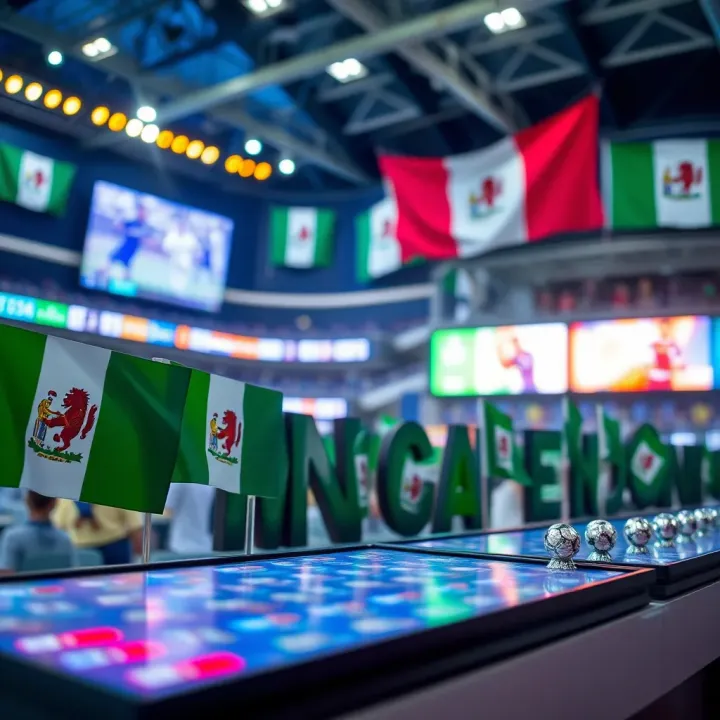
📱 Msport connects Nigerians closely to the Super Eagles 🦅, offering live updates, rich fan content, and boosting the nation’s football spirit across digital platforms. ⚽🇳🇬

Explore Msport games in Nigeria 🎮, their types, popular platforms, and impact on youth ⚽. Understand their role in boosting entertainment and the economy ₦.
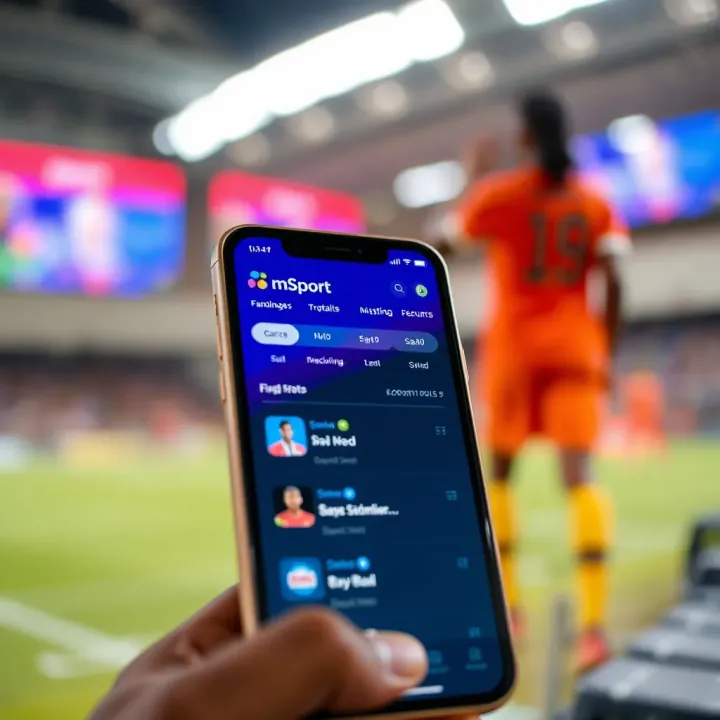
Discover how Kenya's mSport app delivers live updates, betting options, and user-friendly features 🎯. Learn to download, use, and secure your bets easily 📲.
Based on 13 reviews